
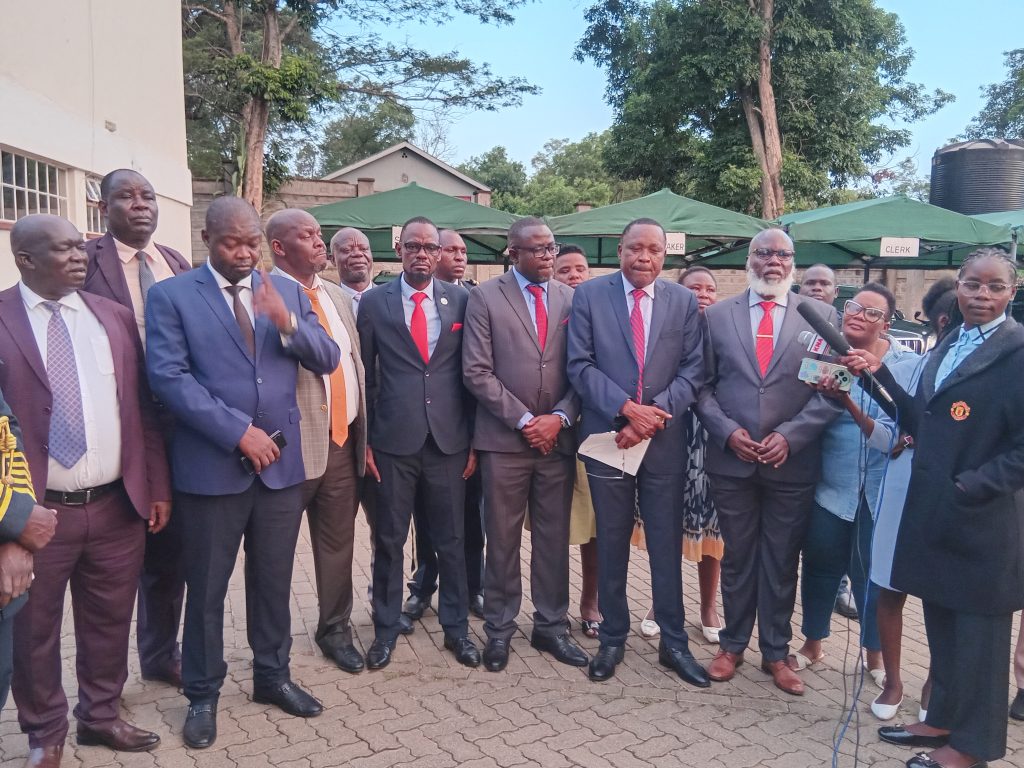
Barely a day after the Migori County Assembly approved its historic Sh12.42 billion budget for the 2026/2027 Financial Year, cracks have emerged within the House, with a section of Members of County Assembly dismissing the spending plan as “outrageous,” “bloated” and disconnected from the pressing needs of ordinary residents.
The dissenting legislators accuse Governor Ochilo Ayacko’s administration of crafting a budget that expands government bureaucracy while offering little hope to unemployed youth, struggling farmers and vulnerable communities.
Leading the criticism are Nominated Youth MCA Chris Kwenya and Tagare MCA Moses Magwe, both vocal critics of the county administration, who argue that the budget betrays the promises made during the 2022 election campaigns.
Kwenya said the spending plan had failed to place young people at the centre of Migori’s development agenda despite youth unemployment remaining one of the county’s biggest challenges.
“This budget has ignored the aspirations of the young people who elected this government with hopes of jobs, enterprise support and economic empowerment. We cannot continue allocating billions while our youth remain unemployed and hopeless,” Kwenya said.
The nominated MCA questioned why youth programmes continue receiving what he described as “token allocations” despite repeated commitments by the county leadership to make youth empowerment a priority.
A review of the approved estimates appears to support concerns over the scale of direct youth investment.
Under the Department of Education, Gender, Inclusivity, Social Services, Youth and Sports, the budget allocates Sh2 million for the Youth Development and Empowerment Programme, while another Sh2 million has been earmarked specifically for Youth Empowerment.
Technical and Vocational Education receives Sh41.4 million, including Sh19 million for infrastructure development, while Early Childhood Development infrastructure has been allocated Sh49.3 million.
Critics argue that although education investments are welcome, direct financing targeting youth entrepreneurship, innovation, business incubation and employment creation remains inadequate compared to the magnitude of unemployment facing young people across Migori County.
Questions Over Spending Priorities
The record budget projects total county revenue of Sh12.42 billion, an increase of nearly Sh1.6 billion from last year’s approved budget of Sh10.83 billion.
Of this amount, Sh9.16 billion will come from the equitable share from the National Government, while own-source revenue is projected at Sh1.2 billion.
However, the spending pattern has attracted sharp criticism.
The county has allocated approximately Sh8.66 billion to recurrent expenditure compared to Sh3.77 billion for development, meaning nearly 70 per cent of total expenditure will go towards salaries, operations and administrative costs.
The Office of the Governor alone has been allocated Sh245 million, including Sh205 million for recurrent expenditure and Sh40 million for development.
Within that allocation are expenditures including:
- Sh30 million for purchase of motor vehicles.
- Sh5 million for prefeasibility studies.
- Millions of shillings for domestic and foreign travel.
- Field operation allowances.
- Hospitality and catering services.
- Communication and publicity campaigns.
The County Executive has been allocated nearly Sh490.5 million, while the Office of the County Attorney will spend Sh70 million.
The Public Service Management and Devolution department commands one of the largest allocations at Sh4.76 billion, largely driven by personnel costs exceeding Sh4 billion.
‘Residents Want Services, Not Luxury’
Tagare MCA Moses Magwe accused the county government of prioritizing administrative expenditure over transformative development.
“Migori residents are crying for better roads, clean water, improved health facilities and support for farmers and young people. Instead, we continue seeing huge allocations for administration while development receives a smaller share,” Magwe said.
He argued that the county government should channel more resources towards agriculture, job creation and economic empowerment programmes capable of improving household incomes.
Magwe further claimed that residents would judge the government not by the size of its budget but by the quality of services delivered.
Agriculture Gets a Major Boost
Despite criticism, agriculture remains among the biggest beneficiaries of the budget.
The Agriculture, Livestock, Fisheries and Blue Economy sector has been allocated Sh488.8 million, including over Sh385.8 million for donor-funded agricultural programmes under NAVCDP.
Crop development has received Sh19 million, while community agricultural projects will receive Sh5 million.
The fisheries subsector has also secured funding for aquaculture, fish feeds, extension services and lakefront fisheries development.
Development vs Administration
Opposition MCAs argue that although several development sectors have received funding, the county still spends disproportionately on administration.
They point to numerous allocations for travel, workshops, committee meetings, hospitality, subscriptions, communication, consultancies and vehicle purchases spread across departments.
Critics say these expenditures should have been trimmed to free up additional resources for youth empowerment, women’s enterprise, market infrastructure and social protection programmes.
Some dissenting MCAs have also alleged that the inflated budget could be used to create political goodwill ahead of the 2027 General Election. However, they did not publicly present evidence to support the claim, and the county government has consistently maintained that all expenditures comply with the Public Finance Management Act and approved planning frameworks.
Governor Defends Development Agenda
Governor Ochilo Ayacko’s administration has maintained that the Sh12.4 billion budget is designed to accelerate socio-economic transformation by investing in healthcare, roads, agriculture, education, water, housing and economic growth while strengthening service delivery across all eight sub-counties.
County officials have also defended the increased budget, citing improved national allocations, enhanced donor support and projected growth in locally generated revenue.
Political Battle Shifts to Budget Implementation
With the budget now approved, attention is expected to shift from the Assembly chambers to project implementation.
For critics such as Chris Kwenya and Moses Magwe, the real test will not be the size of the budget but whether it delivers tangible results for ordinary Migori residents.
As political temperatures begin rising ahead of the 2027 elections, the record budget has already become more than a financial document—it is emerging as the latest battleground over Governor Ochilo Ayacko’s development record, with the opposition promising to closely monitor every shilling spent.
About The Author