
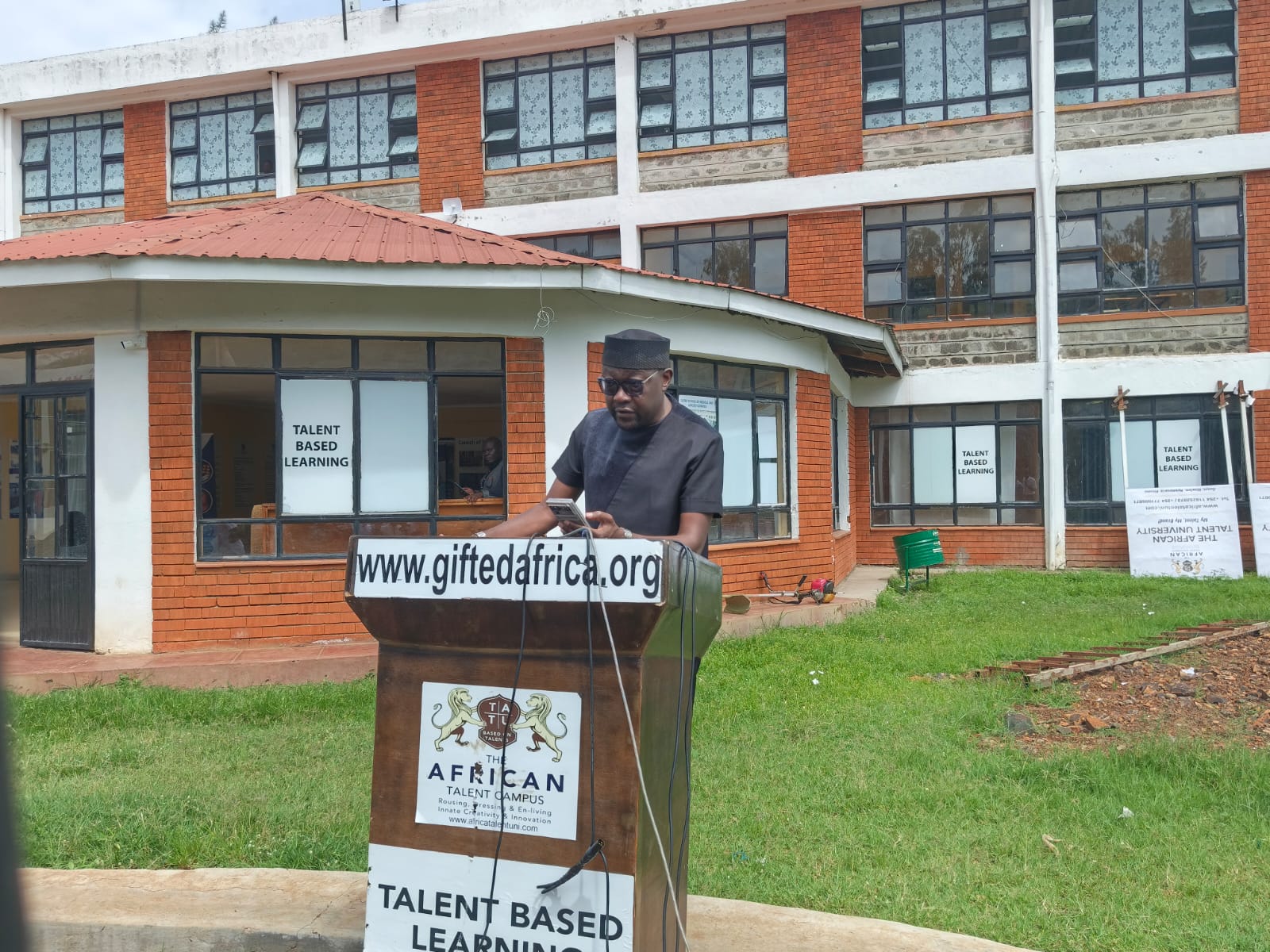
African Talent University (ATU) has officially transitioned from a vision to a fully recognized institution of higher learning.
The university is now authorized to train students and award qualifications following the receipt of vital regulatory documents from Education Cabinet Secretary Julius Migos Ogamba.
The announcement marks the end of a protracted period of regulatory hurdles, signaling a new era for an institution that promises to prioritize “what you can do” over “what you can memorize.
“Speaking from the university’s arena, Professor Humphrey Obora, the Vice-Chancellor of ATU, confirmed that the institution is wasting no time
He has already formally engaged the Higher Education Loans Board (HELB) and the Kenya Universities and Colleges Central Placement Service (KUCCPS).
”We have dispatched letters to ensure our students are integrated into the government’s support systems.
This milestone ensures that those learning at ATU can benefit from placement services and financial aid just like any other recognized university,” Obora stated.
The university’s mission aligns directly with the Competency-Based Curriculum (CBC) currently reshaping Kenya’s primary and secondary sectors.
CS Ogamba has frequently challenged universities to move away from “theory-heavy” degrees that produce graduates who can describe problems but lack the skills to solve them.
ATU aims to be the answer to that challenge.
By focusing on Competency-Based Education, the university plans to Nature diverse Abilities by moving beyond traditional STEM and humanities to include technical and creative talents.
It also focuses on solving real world problems by shifting the focus from exam taking to practical application.
And lastly it aims in validating inordinate potential by creating a pathway for students who may not have achieved top tier grades but possess exceptional specialized skills.
Beyond local borders, Professor Obora extended an invitation to Kenyans in the diaspora, urging them to partner with the institution to drive national development.
He emphasized that the university would serve as a hub for innovation that reflects changing global trends.”Children should not be judged solely by mere grades,” Obora remarked.
“We are here to give a chance to those with immense potential who have previously been overlooked by a rigid academic system.”
The accreditation of African Talent University represents a significant shift in the Kenyan education philosophy.
For decades, the “A-grade” obsession has left thousands of talented individuals without a clear path to professional certification.
By integrating with KUCCPS and HELB, ATU is no longer a niche project it is a mainstream player.
It provides a formal safety net for the CBC generation, ensuring that when students graduate from a competency based high school, they have a university that speaks their language, skills, talent, and practical results.
About The Author