
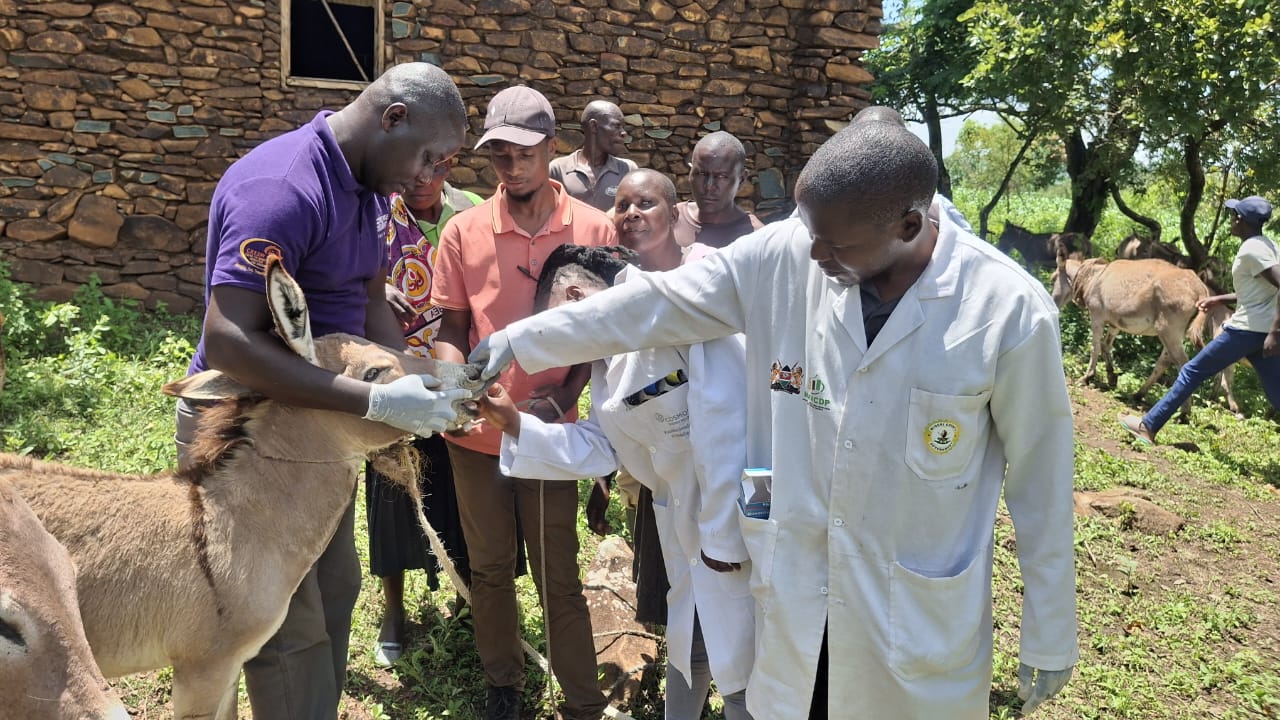
In the dusty paths of Nyatike, the busy market routes of Uriri, and the rugged terrains of Kuria East, the humble donkey has for generations remained the silent engine of rural livelihoods carrying water, transporting harvests, ferrying firewood, and easing the burden of families struggling to survive harsh economic realities.
Yet despite its immense value, the donkey has long suffered in silence.
Overworked. Underfed. Neglected. Beaten. Abandoned without medical care.
Now, a groundbreaking initiative in Migori County is seeking to change that narrative by placing donkey welfare at the center of rural resilience and household food security.
Ripple Effect Kenya, in partnership with The Donkey Sanctuary, has officially rolled out a two-year educational and empowerment project dubbed “Happy Donkeys for Resilient Families.”
The program targets 600 households and seeks to improve the welfare and management of more than 4,000 donkeys across Nyatike, Uriri, and Kuria East sub-counties.
The initiative focuses on peer-to-peer farmer training, veterinary support, proper nutrition, shelter improvement, and community sensitization, all aimed at restoring dignity to one of the country’s most undervalued animals.

Speaking during the launch, project coordinator Simiyu Wechabe described the donkey as an economic lifeline for low-income households and warned that years of neglect and exploitation have pushed the animal into crisis.
“Many users have forgotten that the donkey is a living being,” said Simiyu.
“Lack of sensitization has led to a sharp reduction in donkey numbers not only in Migori but across the country.”
According to stakeholders, donkeys continue to suffer from severe husbandry challenges including flogging, excessive workloads, poor feeding, untreated wounds, and lack of rest.
In many villages, sick or injured donkeys are abandoned and left to roam without care, making it difficult for veterinary officers to trace and treat them.
Simiyu noted that the veterinary aspect of donkey keeping has historically been ignored, despite the animal’s crucial role in rural production systems.
“We need full support for donkey welfare because these animals are also duty bearers. They reduce drudgery for people living in low-income areas and directly support food production and transport,” he said.
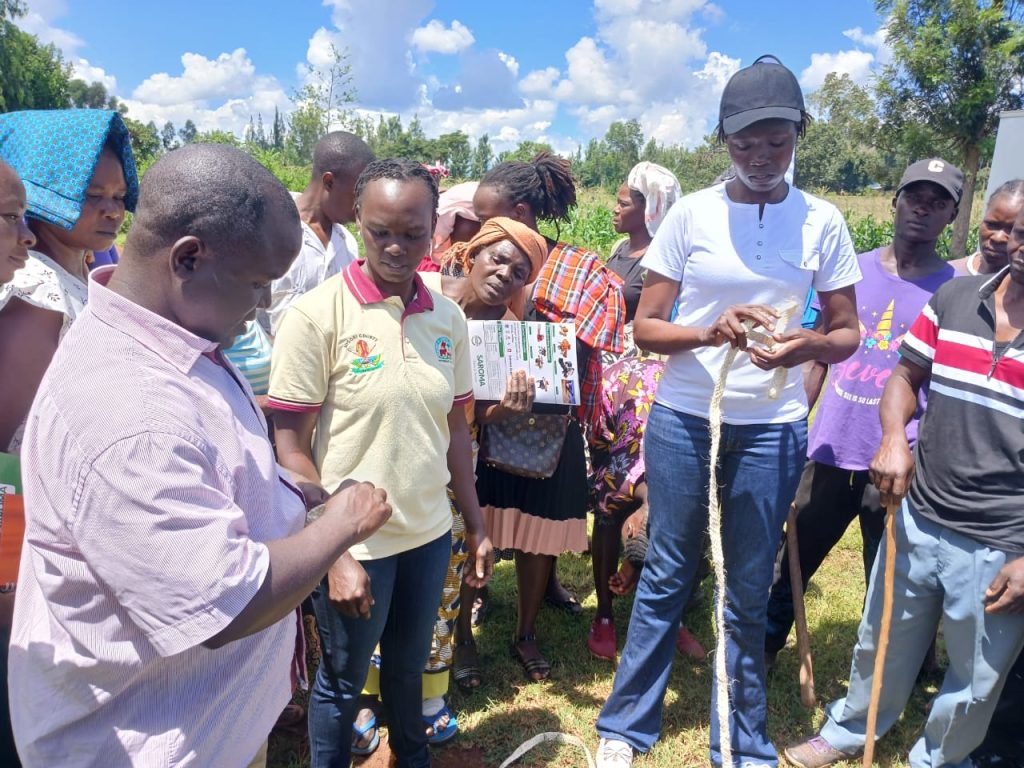
The project has brought together a wide network of partners including Migori County veterinary and agricultural departments, the national government administrative structure, chiefs, agro-veterinary suppliers, and private sector players such as Bimeda Limited, One Acre Fund, Western Seed, and Kenya Seed Company.
The collaboration seeks to ensure farmers access extension services, animal drugs, agricultural supplements, and training on sustainable donkey management.
Chiefs and local administrators have also been enlisted to help sensitize communities on responsible donkey keeping and welfare practices.
The initiative comes against the backdrop of alarming national statistics on donkey population decline.
Data from the Kenya Agricultural and Livestock Research Organization (KALRO) indicates that Kenya had approximately 1.9 million donkeys in 2016. However, stakeholders say the population has drastically declined over the years due to commercial slaughter, illegal skin trade, neglect, and poor welfare practices.
Animal welfare advocates warn that if urgent interventions are not scaled up, the national donkey population could fall below one million.

For families in Migori’s semi-arid regions particularly in West Kanyamkago and parts of Nyatike where drought frequently devastates livelihoods the donkey remains one of the most reliable means of survival.
Unlike tractors or motorcycles that require fuel and expensive maintenance, donkeys provide affordable transport for water, farm produce, and household supplies even during harsh climatic conditions.
One elderly woman from Nyatike emotionally described the deep bond families have developed with the animals.
“The donkey is like my other husband,” she said amid laughter from fellow farmers.
“Without it, we are doomed.”
The statement, though humorous, captured the reality faced by many rural households where donkeys often determine whether families can access markets, transport water, or earn daily income.

Under the program, farmers are being trained on basic health checks, wound management, proper feeding, and construction of safe shelters to protect donkeys from extreme weather conditions.
The project also links donkey welfare directly to nutrition and food security by encouraging families to grow adequate fodder and improve livestock management practices.
According to Simiyu, a healthy donkey contributes significantly more economic value to a family over its lifetime than the short-term gains obtained from slaughter or illegal skin trade.
“A working donkey can contribute up to fifteen times more income to a household than the one-time fee earned from selling it for slaughter,” he explained.
The training has already started transforming perceptions within communities that previously viewed donkeys as disposable tools.
One farmer admitted that many households had never considered donkeys as deserving care and protection.
“Earlier, we viewed donkeys as useless animals,” said a beneficiary in Uriri.
“Since Ripple Effect Kenya stepped in, we have started treating them like our other livestock.”
Another farmer from Kanyasa ward, Nyatike sub county echoed similar sentiments.
“From now henceforth, we view the donkey as an animal of importance. It is not just a tool; it is a source of income and dignity for our families.”
The initiative has also incorporated policymakers and livestock stakeholders in discussions aimed at customizing policies that protect donkey welfare and regulate their use.
Community sensitization forums are being conducted to address cultural misconceptions surrounding donkeys and to discourage illegal slaughter and meat consumption.

Simiyu strongly condemned the killing of donkeys for meat and skins, saying the practice undermines rural livelihoods and threatens long-term economic sustainability.
“Communities must understand that protecting the donkey means protecting their own future,” he said.
As Migori joins other regions such as Homa Bay and Mount Elgon where similar Ripple Effect programs are underway, hopes are rising that the “beast of burden” will finally receive the recognition, protection, and humane treatment it deserves.
For many farmers, the message is now clear: caring for the donkey is no longer just an animal welfare issue it is a fight for resilient families, sustainable agriculture, and rural survival itself.
About The Author


